Coordinating a group at San Francisco International Airport is one of those things that sounds straightforward until you're standing at the wrong terminal door with twenty people, six rolling bags, and a rideshare that's parked on Level 5 of a garage you didn't know existed. SFO serves more than 55 million passengers a year across four separate terminal buildings — Harvey Milk Terminal 1, Terminal 2, Terminal 3, and the International Terminal — each with its own approach curb, its own baggage claim, and its own set of first-timer traps. Rideshare pickup moved off the arrivals curb.
The Terminal 3 AirTrain station is closed through 2027. And the drive from downtown SF can take anywhere from 20 minutes to nearly an hour depending on when you're on US-101. A San Francisco charter bus rental cuts through all of it — one vehicle, one pickup spot, straight to the hotel or venue — and Partybusinsanfrancisco.com makes it easy to compare options from a large network of bus companies serving the Bay Area.
Call 415-813-5448 or use the online quote form to compare pricing in about a minute.
Below is the complete logistics-first guide to SFO group transportation. Every fact below is sourced from verified official and operational pages, and the Terminal 3 section reflects the live 2026 construction changes that are currently affecting curb access and AirTrain service through 2027. Read it before you coordinate a pickup — this is the information that separates a smooth group arrival from an hour of everyone texting each other from different floors of a parking structure.
Why Rent a Charter Bus or Party Bus to SFO?
The case for a bus starts with a number: SFO sits 12 miles south of downtown San Francisco, and that corridor on US-101 — the Bayshore Freeway — runs 20 to 30 minutes off-peak and 30 to 50 minutes during weekday rush hours (7–10 AM and 3:30–7 PM). Rain, which happens more often than Bay Area tourism brochures suggest, adds another 20–40% on top of that. For a group flying in, that's one variable.
The bigger problem is everything that happens once you land.
On-site parking at SFO runs from $27/day in the Long-Term Garage to $39/day in the Domestic Garage, with standard garages capped at a vehicle height of 6'10" — meaning a large SUV or passenger van might not even clear it. If your group is driving multiple cars, you're coordinating multiple parking spaces, multiple AirTrain rides to the terminal, and multiple designated drivers who can't participate in anything on the way. Rideshare is worse for groups: at SFO's domestic terminals, Uber and Lyft pickups are no longer at the arrivals curb.
They're on Level 5 of the Domestic Garage, with zone assignments that change by terminal. First-timers exit baggage claim, stand at the curbside waiting area, and spend 15 minutes looking for a car that's upstairs. It happens every day.
A bus to SFO eliminates the entire chain. One vehicle meets your group at the Arrivals Level center island — the designated pickup zone across from baggage claim at all four terminals — and goes directly to your destination. No parking garage navigation, no Level 5 rideshare hunt, no AirTrain rides with checked bags, no per-head BART fare times twenty people.
For groups of 15 or more, it's almost always the simpler and cheaper call per person. The San Francisco airport transportation page has more on how the full range of SFO transfers works.
Charter Bus & Party Bus Drop-Off and Pickup at SFO
SFO's four terminal buildings sit on a continuous roadway loop with two levels: the upper Departures level (where ticketing and check-in happen) and the lower Arrivals level (where baggage claim exits and ground transportation wait zones are located). Every terminal uses this same two-level structure, and the rule is consistent: drop-off for outbound groups happens on the upper Departures level; pickup for arriving groups happens at the lower Arrivals level center island.
For pickup — when the bus is collecting your group after a flight — all three domestic terminals (Harvey Milk Terminal 1, Terminal 2, and Terminal 3) use the same system: passengers exit baggage claim, cross the roadway, and wait at the center island, where blue sign posts marked "Airporters" designate the pre-arranged bus and shuttle pickup zone. The International Terminal uses the same center island system on its Arrivals Level roadway. Have your group coordinator contact the bus only after the full group has collected bags and is assembled at that island — not while people are still at the carousel.
The arrivals roadway moves continuously and staging time is limited; getting the whole party together first is the move that makes the loading efficient.
Don't send someone outside to hold the bus while the rest of the group is still at baggage claim. Assemble everyone with all bags at the Arrivals Level center island, then call the vehicle forward. At SFO's active curbside, a bus cannot idle indefinitely at the pickup zone — have the group ready to board immediately.
Terminal-by-Terminal Notes for Groups
Harvey Milk Terminal 1 serves Delta, JetBlue, Southwest, and Alaska Airlines (Boarding Areas B and C). The terminal has two separate baggage claim areas corresponding to its two boarding areas — if your group is arriving on flights that use different boarding areas, confirm in advance which end of baggage claim each flight exits from and agree on one center-island staging spot so no one wanders to the wrong curb.
Terminal 2 serves American and Alaska Airlines (Boarding Area D). This is the most compact of the domestic terminals, with a single consolidated baggage claim level. It's the easiest SFO terminal for group pickup coordination because everyone exits through the same set of doors — the "Airporters" center island is directly across the roadway.
Terminal 3 serves United Airlines domestically with two boarding areas (E and F). This terminal is undergoing major construction with significant operational changes in 2026 — the full section below covers what's changed and how to route around it before you show up at a closed curb.
International Terminal has two separate boarding areas — A and G — with two separate customs and baggage claim halls located a substantial distance apart in the terminal building. Confirm ahead of time which boarding area your international flights use: passengers from Boarding Area A and passengers from Boarding Area G exit through different halls and different doors. For large international arrivals, meet-and-greet service inside the terminal — where a representative waits at the customs exit with a name board — is often the better call, since baggage claim timing for international flights is harder to predict.
Once everyone's through customs, the bus pickup point is the same Arrivals Level center island across the roadway.
What the Terminal 3 Construction Means for Your SFO Group in 2026
The Terminal 3 modernization project at SFO went active in late 2025, and the impacts for group transportation are operational enough to plan around specifically. Per SFO's published construction notices, here's what's changed:
The Terminal 3 AirTrain station is closed until 2027. The station at Terminal 2 has been renamed "Terminals 2 & 3 AirTrain Station" and handles both terminals during construction. Any group member who needs to connect via AirTrain to the BART station, the long-term parking lots, or another terminal will board at the T2 station rather than the shuttered T3 station — and for some passengers this means a walk between T2 and T3 before they can access the AirTrain at all.
The departure level curb between Terminal 3 Doors 6 and 13 is closed until 2027. For groups being dropped off for United flights out of Terminal 3, the practical alternatives are the Terminal 2 departure curb (for passengers using D and E gates — United now has check-in counters in Terminal 2's west end for those gates) or the Terminal 3 arrivals level, which remains accessible for drop-offs. United passengers departing from F gates use Terminal 3's east end counters, which remain open.
For arrivals at Terminal 3: baggage carousels 1–3 are closed, so United arrivals collect bags at the remaining operational carousels. The pickup zone for arriving passengers runs from Doors 4 through 12, with the least congestion typically near Doors 10–12. If your group is picking up United passengers at Terminal 3 in 2026, designate Doors 10–12 as the staging rendezvous and confirm the carousel assignment before landing.
Check the official SFO website at flysfo.com before your date for the most current status — construction timelines move.
For United groups in 2026: D and E gate passengers check in at Terminal 2 counters; F gate passengers use Terminal 3 east end counters. Drop-off for D/E gate passengers should use the Terminal 2 departure curb. For T3 arrivals, pickup runs from Doors 4–12 — least congestion near Doors 10–12.
Getting from SFO to Downtown San Francisco: Charter Bus, BART, or Rideshare
SFO has legitimate transit connections, and it's worth being straight about them before explaining why a bus is usually the better call for groups. BART runs directly from the International Terminal — take the free AirTrain from any terminal to the BART station (8–15 minutes of walking and riding), and from there it's about 30 minutes and $11.05 per person to downtown stations including Embarcadero, Montgomery Street, Powell Street, and Civic Center, per the SFO BART guide. BART runs from 4:54 AM to 12:30 AM daily and is genuinely great for a solo traveler with a carry-on bag.
The official BART connection details are at bart.gov.
For a group of 15 or 20 people with a week's worth of checked luggage after a long flight, BART becomes a logistical obstacle. The AirTrain from any domestic terminal to the BART station adds 8–15 minutes, then you're maneuvering suitcases through fare gates and onto a packed platform, hoping everyone fits in the same car. At $11.05 per head for 20 people, that's $221 in BART fares — and everyone still arrives in different seats, scattered across a train, without any central coordination for getting from Powell Street to the hotel with all those bags.
Rideshare bridges the last mile, but you're back to the Level 5 Domestic Garage problem and potential surge pricing.
A charter bus or minibus rental from SFO skips the entire chain. The vehicle meets your group at the Arrivals Level center island — one spot, one load-up, one departure — and goes directly to the hotel entrance, the convention center, or wherever the group is headed. For the math on when a bus makes sense compared to the alternatives, the table below lays it out directly.
| Option | Cost shape | Group stays together? | Pickup location | Best for |
|---|---|---|---|---|
| Charter bus or minibus rental | One flat rate, split across the group | Yes — one vehicle, one departure | Arrivals Level center island — all four terminals | Groups of 10 or more, especially with checked bags |
| BART | $11.05 per person each way | Only if everyone boards the same car | International Terminal BART station via AirTrain | Solo travelers or small groups with carry-on only |
| Rideshare (Uber/Lyft) | $25–65+ per car, surge-variable | No — multiple cars, staggered ETAs | Level 5, Domestic Garage — zone varies by terminal | 1–4 people with manageable luggage |
| Taxi | Metered, typically $45–70 to downtown | No — one car at a time | Arrivals curb at each terminal | 1–4 people, straightforward if BART is closed |
| Drive and park | $27–$60/day per car in airport garages | No — caravans split | Domestic Garage (6'10" height limit) or Long-Term | Short trips, 1–2 cars |
SFO Parking Costs vs. a Charter Bus Rental: The Group Math
Here's the number most group organizers don't work out until it's too late. According to published 2026 SFO parking rates, on-airport garages charge $27/day in the Long-Term Garage, $37/day in the International Garage, and $39/day in the Domestic Garage. Short-term parking is $8/hour ($2 per 15 minutes) across all on-site facilities.
And the standard Domestic and International garages have a maximum height of 6'10" — meaning a large SUV, a passenger van, or a rented minivan may not fit, and you're hunting for the Long-Term lot instead, which requires an AirTrain ride to reach the terminals.
Run the math for a typical scenario. Eight people fly out for a four-day conference, driving four separate cars. At the Long-Term rate of $27/day per car, that's $432 in parking fees across the four days, before gas, before each car's designated driver who can't fully participate in whatever the trip is for.
At the Domestic Garage rate of $39/day, it's $624. Neither figure includes the two AirTrain rides per car — in and out — to reach the terminals. Meanwhile, one minibus for eight people to SFO often runs less total than the combined parking cost, with everyone traveling together and no one stuck doing the math at a garage payment kiosk.
For arriving groups where no one is driving — which is the standard convention or corporate scenario — the comparison is purely rideshare surge fees versus one bus price, per head. The SFO Cell Phone Waiting Lot near North McDonnell Road and San Bruno Avenue is free for personal vehicles waiting up to 60 minutes — but it explicitly prohibits commercial vehicles, so charter buses and shuttle vans use separate permitted staging areas. That's not a restriction that affects your group; it just means the bus isn't circling the Cell Phone Lot and will be staged at its own designated area until your group is ready at the terminal island.
Driving to SFO: Routes, Rush Hours, and the US-101 Squeeze
The primary approach to SFO from downtown San Francisco is southbound US-101, the Bayshore Freeway. It's the most direct corridor — the airport has its own collector-distributor roads that peel off from US-101, letting commercial vehicles transition to the terminal loop without merging across the main lanes of the freeway. Off-peak, the drive from the Financial District or SoMa to the terminal roadway runs about 20–25 minutes.
That's the good news.
The bad news is US-101 in rush hour. The weekday morning window runs from 7 to 10 AM, the evening window from 3:30 to 7 PM — and the Bayshore corridor is one of the Bay Area's most congested in both directions, with backups that extend well past San Bruno on bad days. I-280 is the alternative: it runs slightly longer in miles but often flows better during peak hours.
I-380 connects I-280 and US-101 just north of San Mateo, making it the natural shortcut for groups originating on the Peninsula, in the South Bay, or arriving via I-880 from the East Bay. Rain — and there's a lot of it in the Bay Area — adds 20–40% to all of these numbers across the board.
If your group is flying out, work backward from the departure time: domestic flights call for at least 2 to 2.5 hours of airport time before boarding, plus the drive. Departing during evening rush from SoMa? Budget 45–55 minutes from downtown, not 20.
The bus can be routed via I-280/I-380 on a congested day — and that routing flexibility is what separates a stress-free group departure from a frantic one.
What Size Bus Does Your SFO Group Need?
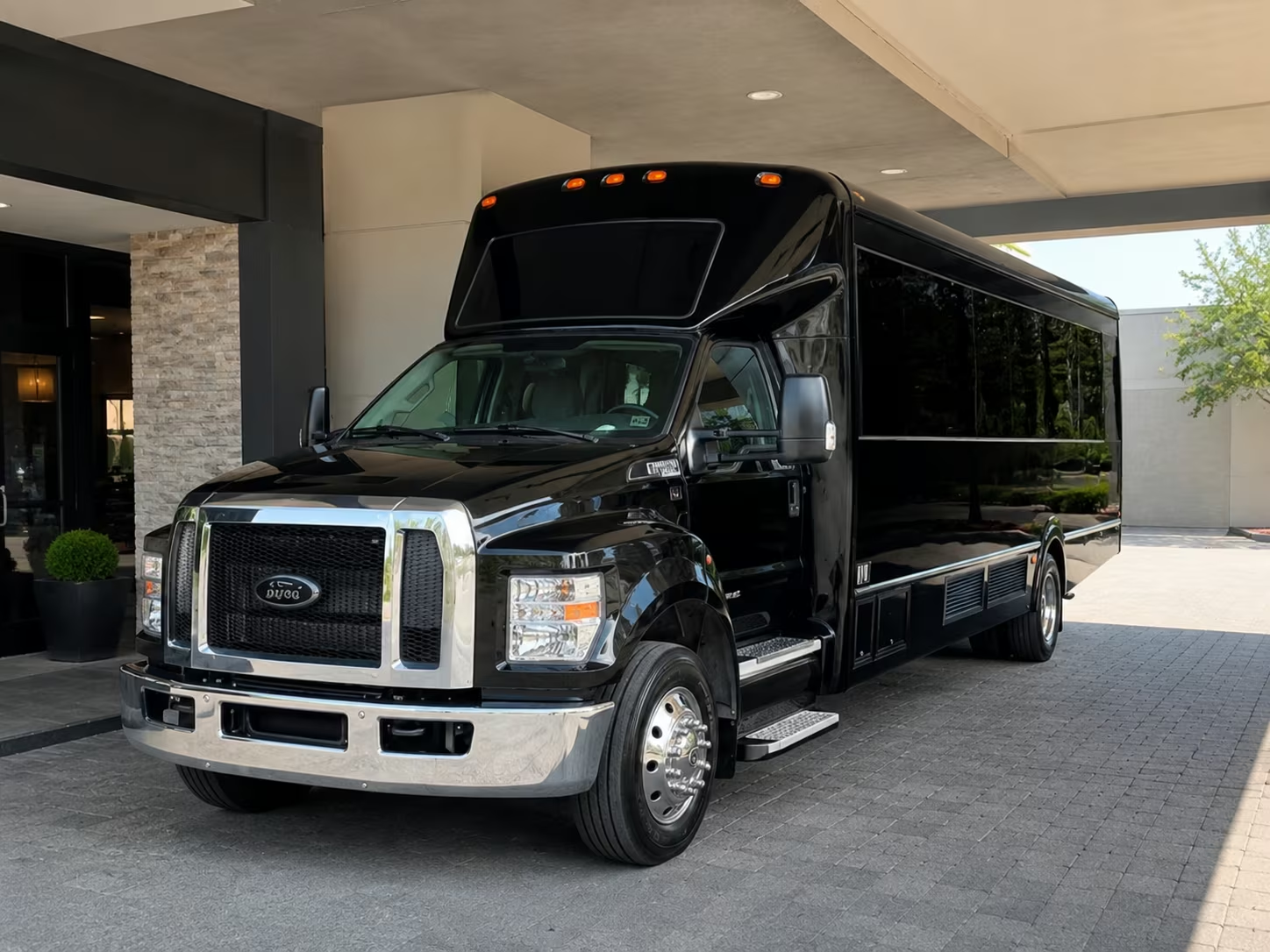
The right vehicle for an SFO transfer comes down to two things: headcount and luggage. A 12-person executive team flying in for a one-day corporate meeting needs something different from a 48-person convention group with a week's worth of checked bags. Here's how the full vehicle lineup maps to common SFO scenarios.
| Vehicle | Seats | Luggage capacity | Best for | Key features |
|---|---|---|---|---|
| 14-passenger Sprinter limo | Up to 14 | Modest — small group bags | VIP corporate arrivals, bridal parties, executive transfers | Premium leather, USB charging, tinted privacy windows |
| Sprinter van | Up to 14 | Overhead only | Small business groups, lean corporate teams, quick transfer runs | Climate-controlled, individual seating, efficient for the 101 run |
| 15–35 passenger minibus | Up to 35 | Overhead racks plus some underfloor | Mid-size conference groups, sports teams, wedding guests at a hotel block | Powerful A/C, plush reclining seats, Bay Area maneuverability |
| 40–56 passenger charter bus | Up to 56 | Excellent — deep undercarriage bays | Large convention groups, corporate off-sites, tour groups, any trip with heavy gear | Reclining seats, climate control, WiFi, power outlets, onboard restrooms, undercarriage bays |
Luggage is usually the variable that forces the decision up a size. Twenty people traveling carry-on-only after a day-trip conference can fit comfortably in a 25-passenger party bus or a minibus. The same twenty people returning from a week-long convention with checked bags need the undercarriage bays of a full charter bus — overhead racks in a minibus fill fast with rolling suitcases.
ADA-accessible vehicles are available through the network; note the need when you request a quote and the right vehicle can be arranged.
SFO Charter Bus and Party Bus Rental Prices
To give you an idea of what an SFO group transfer costs: a 15–35 passenger minibus typically runs $200–$250 per hour on weekdays (up to $200–$275 on weekends); a 40–56 passenger charter bus runs $200–$350 per hour on most dates. Pricing for your specific group size, date, terminal, and destination comes from a quote — the online tool returns options in about a minute, and a support team is available at 415-813-5448 any time. No account required, no obligation.
Check the San Francisco party bus prices page for a full range of rate scenarios by vehicle type.
The per-head math almost always favors the bus once you're past ten or twelve people. A 40-person group on a charter bus at $300/hour for a 2-hour transfer works out to roughly $15 per person — compared to $11.05 each on BART (with the AirTrain connection and luggage on the platform), or $40–$65 per car in rideshare that doesn't even guarantee everyone arrives at the same time.
A Sample SFO Transfer
To make it concrete: a company of 44 people books a 56-passenger charter bus to collect employees arriving on four separate flights at the International Terminal, the last of which clears customs around 4:30 PM. The bus stages near the terminal loop and pulls to the Arrivals Level center island after the final group is assembled — around 5 PM. The 2-hour block to the Financial District hotel, at $200–$350/hour, runs roughly $400–$700 total — about $9–$16 per person — and everyone arrives at the same front door at the same moment instead of trickling into the lobby across 45 minutes of separate surge rides.
The bus is simpler and frequently cheaper per head.
Convention and Corporate Groups: SFO to Moscone Center, Union Square, and the Financial District
SFO is the primary gateway for the Bay Area's convention calendar, and that calendar is dense. Dreamforce 2026 runs September 15–17 at the Moscone Center with 100,000+ attendees expected — which means a heavy wave of out-of-town Salesforce customers and partners arriving through SFO on the same Monday-morning wave. When that many people land at once, rideshare supply dries up fast, surge pricing spikes, and Level 5 of the Domestic Garage becomes its own kind of chaos.
A dedicated SFO-to-Moscone charter bus keeps your company's group together from baggage claim to the convention registration desk.
The Moscone Center at 747 Howard Street in SoMa sits about 15–20 miles from SFO, typically 25–35 minutes by bus off-peak. Union Square hotels — the most common hotel block for conventions — are 12–15 miles, roughly 20–30 minutes under normal conditions. The Financial District is comparable.
A single 40-56 seat charter bus handles the entire company's airport transfer in one run: one bus meets your group at the International or domestic terminal arrivals island, loads in, and delivers everyone to the hotel or convention center as a unit — no one waiting alone on a street corner, no staggered arrivals, no surge-fee receipts to file.
The same logic applies in reverse for the return trip to SFO after a convention wraps. The bus picks up from the hotel or convention center loading zone, everyone's luggage goes in the undercarriage bays, and the group moves to the correct terminal drop-off as a unit rather than splitting across three UberXLs and two regular Ubers. For a company shuttling 40+ people to SFO at 7 AM after a multi-day conference, that coordination alone is worth the bus.
See the Moscone Center bus guide for the specific drop-off and loading zone details at the convention center itself, and the San Francisco corporate event transportation page for the broader group transfer picture.
Peak Booking Periods at SFO: When to Plan Ahead
Dreamforce (September, Moscone Center, 100,000+ attendees) and Outside Lands (August 7–9 in Golden Gate Park, 75,000 attendees per day) are the two events that drain the vehicle supply fastest. For Dreamforce, the Monday morning inbound wave — when every Salesforce customer in the country is arriving at SFO simultaneously — is the peak moment; vehicles for that specific window often go weeks out. Fleet Week in October draws huge air-show crowds to the waterfront and spikes inbound group travel as well.
For any of these events, book as soon as your travel dates are confirmed — the right-size vehicles go first, and the best way to keep your group riding together is to lock it in early. Call 415-813-5448 to check availability for your date.
Frequently Asked Questions About SFO Bus Rentals
Where does a charter bus or party bus drop off at SFO?
Drop-off for outbound groups happens at the Departures (upper/ticketing) level at all four terminals. That's the upper roadway marked "Departures" or "Ticketing" at each terminal building — Harvey Milk Terminal 1, Terminal 2, Terminal 3, and the International Terminal. For Terminal 3 specifically, note that the departure curb between Doors 6 and 13 is currently closed through 2027.
United passengers using D and E gates should be dropped at the Terminal 2 departure curb; F gate passengers can be dropped at the Terminal 3 arrivals level. Check the official SFO website for the current status before your date.
Where does a charter bus pick up arriving passengers at SFO?
Pickup for arriving passengers happens at the lower Arrivals Level center island at all terminals. Passengers exit baggage claim, cross the roadway, and wait at the blue posts marked "Airporters" — the designated pre-arranged pickup zone for buses and shuttles. This applies to all three domestic terminals and to the International Terminal's arrivals roadway.
Have the complete group assembled with all bags at the island before calling the vehicle forward.
How far is SFO from downtown San Francisco?
SFO is about 12 miles south of downtown San Francisco via US-101 or I-280. Off-peak, the drive runs 20–30 minutes. During weekday rush (7–10 AM and 3:30–7 PM), plan 30–50 minutes.
Rain adds another 20–40%. BART covers the same distance in roughly 30 minutes for $11.05 per person, but requires an AirTrain connection from domestic terminals (8–15 minutes) before you reach the platform.
What are the SFO parking rates in 2026?
Published 2026 SFO parking rates: Long-Term Garage approximately $27/day; International Garage approximately $37/day; Domestic Garage approximately $39/day. Short-term parking runs $8/hour across all on-site facilities. Standard garages have a 6'10" maximum vehicle height; the Long-Term Garage allows up to 8'2" but requires an AirTrain ride to reach the terminals.
Rates are always confirmed on the official SFO website before arrival. For groups of any size, the combined parking cost for multiple cars usually exceeds a charter bus transfer cost split across the group.
What is the Terminal 3 AirTrain station situation in 2026?
The Terminal 3 AirTrain station is closed until 2027. The adjacent Terminal 2 station — now renamed "Terminals 2 & 3 AirTrain Station" — serves both terminals during construction. Any group member connecting to BART, the long-term parking lots, the Rental Car Center, or another terminal needs to use the T2 station.
For a group pickup, this doesn't change the bus logistics — the arrivals island at Terminal 3 is still accessible. But group members trying to meet friends at a different terminal, or anyone attempting to take BART from Terminal 3, will need to account for the extra walk to the T2 station.
How much does a charter bus or party bus to SFO cost?
Pricing varies by vehicle size, total hours including terminal wait time, date, and distance from the pickup origin to SFO. To give you an idea: minibuses typically run $200–$250 per hour on weekdays; charter buses run $200–$350 per hour. A firm quote for your specific group, date, and route takes about a minute at 415-813-5448 or through the online form.
No account required, no obligation.
Can the bus wait at SFO while my group's flights land?
Yes. Charter and party bus rentals are booked as a block of hours, so the vehicle is reserved for your group for the full duration — including wait time at the terminal if a flight runs late or baggage claim takes longer than expected. For groups arriving on multiple flights with staggered landing times, build the wait buffer into the quote upfront so the timing is locked in from the start rather than negotiated at the curb after a transatlantic flight.
Is BART worth it for a large group flying into SFO?
For groups smaller than ten with carry-on luggage only, BART is hard to beat: $11.05 per person, 30 minutes to downtown, reliable hours. For groups with checked bags or more than ten people, the AirTrain-to-BART transfer gets complicated fast — navigating fare gates with rolling luggage on a rush-hour train while keeping a group together is a real logistical friction, and everyone still arrives at a station rather than a hotel door. A minibus or charter bus is the cleaner call for groups of ten or more with any significant luggage.
Where does the bus wait if flights are delayed?
Commercial buses at SFO have separate permitted staging areas away from the Cell Phone Lot (which allows personal vehicles only, up to 60 minutes). A pre-arranged bus is staged in the appropriate commercial vehicle area until your group is ready at the arrivals island. The exact staging location and how the bus is notified when your group is assembled gets worked out when you request your quote — that coordination is part of the booking.
How far in advance should I book a charter bus to SFO?
For standard dates outside major events, two to four weeks of lead time is workable. For Dreamforce week (September), the weeks surrounding Outside Lands (August), Fleet Week (October), and any holiday travel weekend, book as early as your date is confirmed. The Monday morning inbound wave during Dreamforce week drains available vehicle supply in the Bay Area faster than almost any other recurring event — if your company is sending 40+ people to Salesforce's annual conference, locking in the airport transfer the same day you confirm the hotel block is not too early.
Call 415-813-5448 to check availability.
Book Your SFO Group Transfer Today
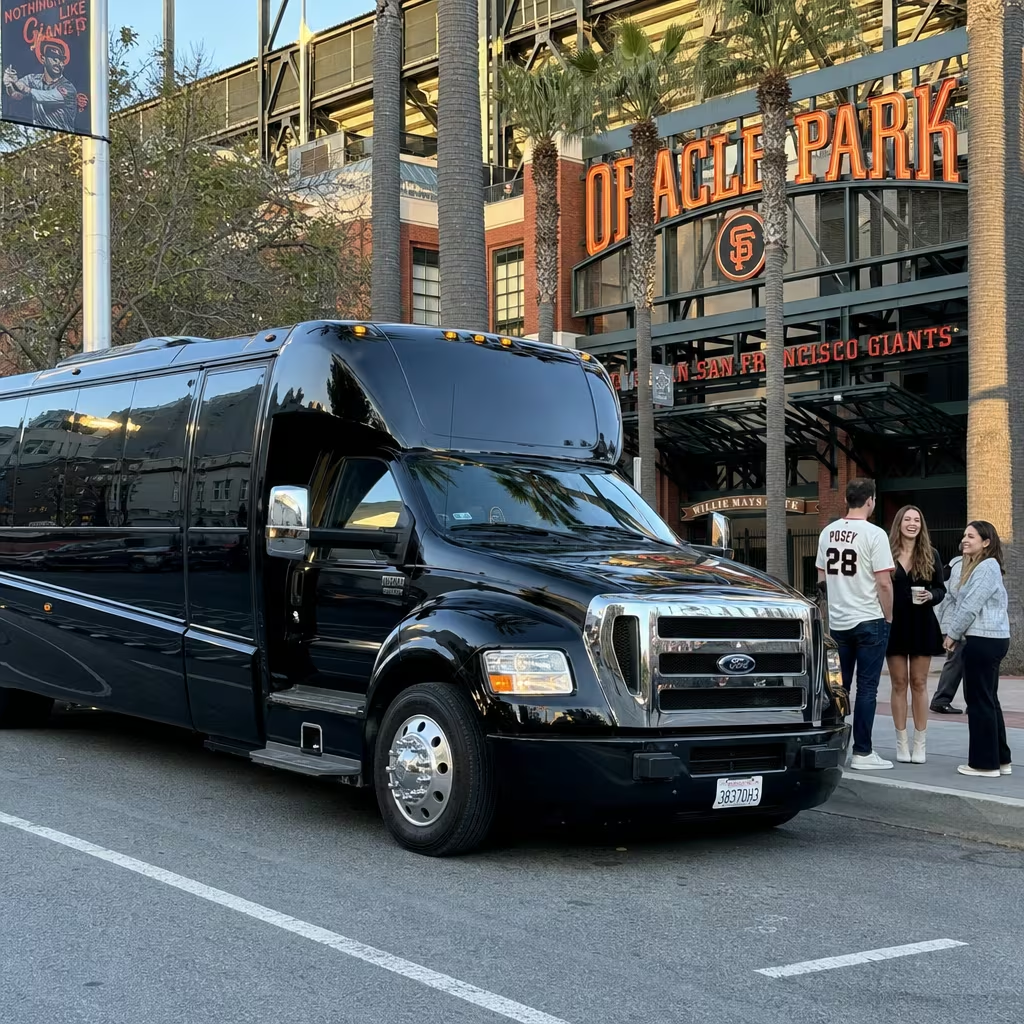
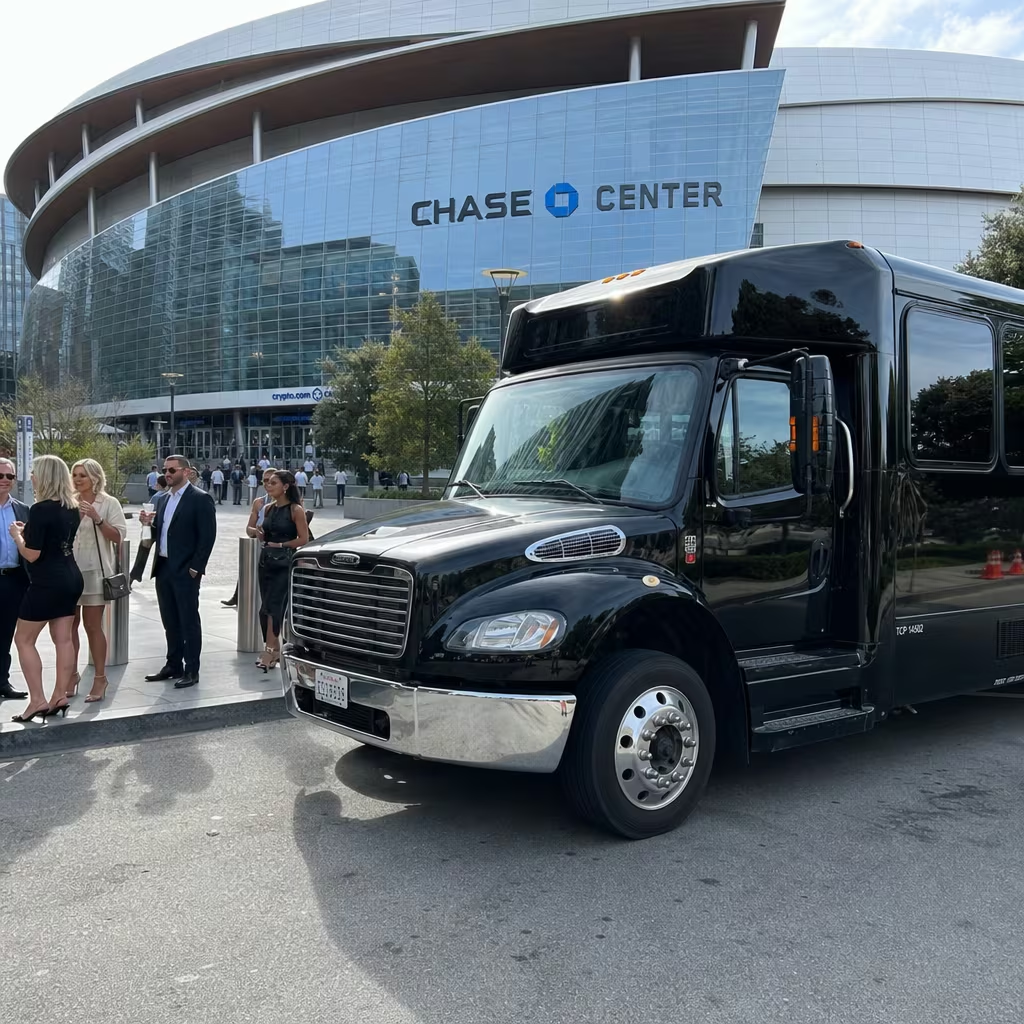
The simplest group airport run in the Bay Area is a bus that meets your people at the terminal arrivals island and goes directly where they're headed — no Level 5 rideshare navigation, no AirTrain-and-platform juggling with checked luggage, no multi-car surge-pricing math. Partybusinsanfrancisco.com makes it easy to compare San Francisco charter buses, party buses, minibuses, and Sprinter vans from a large network of bus companies serving SFO and the entire Bay Area — pricing in about a minute, no account required. Call 415-813-5448 any time for a free quote, or use the online form for instant options. And if your group is headed to a venue after landing — a Warriors game at Chase Center, a Giants game at Oracle Park, or a tech conference at Moscone — those San Francisco group transportation guides have the venue-specific drop-off details already mapped out.